Thursday, March 21, 2013

Chain Story created by 5K


THE MAGICAL NIGHT

It was a cold, shivery night! It was really dark and Harry could hear weird noises. He wanted to leave the house. But, Harry’s friends were extremely scared and were hiding under their blankets. Harry gathered some courage and bravely walked outside his door. Surprisingly, he saw that his friends were already out! Suddenly, he saw a shadow, shadow of a tiger!!

When Harry went nearer to see what it was, he saw a huge load of ice! Harry shouted, “Look, look, it’s snowing inside my house! What are we going to do?” Sam suggested that all of them could go to his house as it is close by. Then they could get some help. So, all of them walked anxiously towards Sam’s house. Unfortunately, they lost their way and entered a creepy forest. There was no sight of another human!!

Gradually Harry, Sam and all other friends walked into the increasingly dense forest. Subsequently, they found a bear, a talking bear! The talking bear was quite talkative. Harry asked the bear to help them find their way. The bear led them towards the end of the forest and there they found a stream of water. It was gleaming under the moonlight. Harry could see silvery fishes swimming near the shore. Splash! Slush! Splosh! Squish! The curvy waves were hitting the humungous rocks.

Harry was so mesmerised that he missed his step and leaped into the water! His heart started thumping! Lub – Dub – LUB – DUB – LUB – DUB… He knew this would be the end of his life! He was miserable. He was terrified. He was breathless. He was petrified. But, amazingly, Harry could breathe! He could feel pure, cold air entering his lungs. How? He didn’t have a clue! For the next hour or so, he kept swimming endlessly! He had no idea where the icy water was taking him.

His heart missed a beat when lying in the river bed, he saw a glittering, dazzling box. The box had intricate floral designs on it and from the yellow shine, Harry could tell it was made of gold! As Harry reached for the box, he was attacked by a giant fish. It was a fish he had never seen in his life before! It was partly shark and partly whale. In a hurry, Harry glided towards the sparkling box. As soon as he touched the box, He started spinning and swirling in the water. In a second, he was out! Astonishingly, he wasn’t even wet! Where were his friends?? Had they left him? How long was he inside the water? What will he do now? His head was flooded with all sorts of questions! Exasperated, Harry sat on the floor and opened the chest. Comfortably sitting inside the chest was a tiny, white note. On it were three words – WAKE UP HARRY!!

Wednesday, March 20, 2013

Using audio tools to enhance reading skills


The audio tools are excellent resources to reinforce good reading strategies. There are many ways of creating/audio audio files: online (websites like www.soundcloud.com) or offline (softwares like audio boo and built in computer accessories like 'sound recorder').

The class 5 students have been making good use of these audio tools in the classroom. We used it to create a glog for our previous unit. We have now begun to use the tools in Reading. There are a couple a few things that the students have done so far:

They read pages from the ORT books and recorded their own voices. Later, they heard themselves and reflected on the short-comings. They re-recorded themselves to notice the improvement. Many students listen to stories online.

In Novel study, the students are focusing on the Bloom's Taxonomy as of now. For the 'analysis' stage, the students were asked to talk about how Narnia undergoes seasonal changes from different perspectives: the queen, the faun, Mr. Beaver, etc. They recorded themselves speaking and later self-reflected.

Here is a sample in which a student talks about the change of weather in Narnia from the queen's perspective:

Monday, March 4, 2013

Integrating Mathematics

Amongst the five strands of Mathematics, 'Data Analysis' is said to be the easiest to integrate with the units of inquiry. However, one needs to be mindful of integrating it meaningfully and creatively. While creating graphs based on data collected is simplest to accomplish, there are many other ways of integrating this strand.

For our unit on Energy, we focused on the skill of analysing graphs and making conclusions. Groups of students were given different graphs based on energy and its consumption. They were asked to read the graphs carefully. For the new terms, students were asked to refer laptops in order to find the definitions/explanations. They also added information on the 'I found that...' wall as and when they found something new.

The teacher put forward provocative questions as the students inquired into to the graphs: 'Why do you think Canada is leading in energy  consumption?'; 'Why don't the African countries use a lot of energy?'; 'Why doesn't India use a lot of renewable energy?'; 'Why do you think the cost of installing solar panels will decrease over time?'. There was an elaborate discussion after this.

This was very well connected to the AgaKhan Strand 'Economics for Development'.


Friday, March 1, 2013

Four Corners

Grade 5 did a very interesting learning engagement today. Four captions were displayed around the class: COMPLETELY AGREE, AGREE, DISAGREE AND COMPLETELY DISAGREE. The teacher put forward provocative, open-ended questions/statements like  that were related to energy and it's suutainability. For example: "We should try and use solar energy as much as possible"; "Countries must fight with each other to own resources"; "Rich families to own many cars"; "Energy can never be created nor destroyes, it can be converted". The students were asked to stand next to the caption that they thought was right. There were discussions for each of the questions. The AK strand 'Economics for develoment' was kept in mind while framing the questions. This gave an opportunity for the students to reflect and put forward thoughts and arguments


Thursday, February 28, 2013

Field trip: Bamboo House

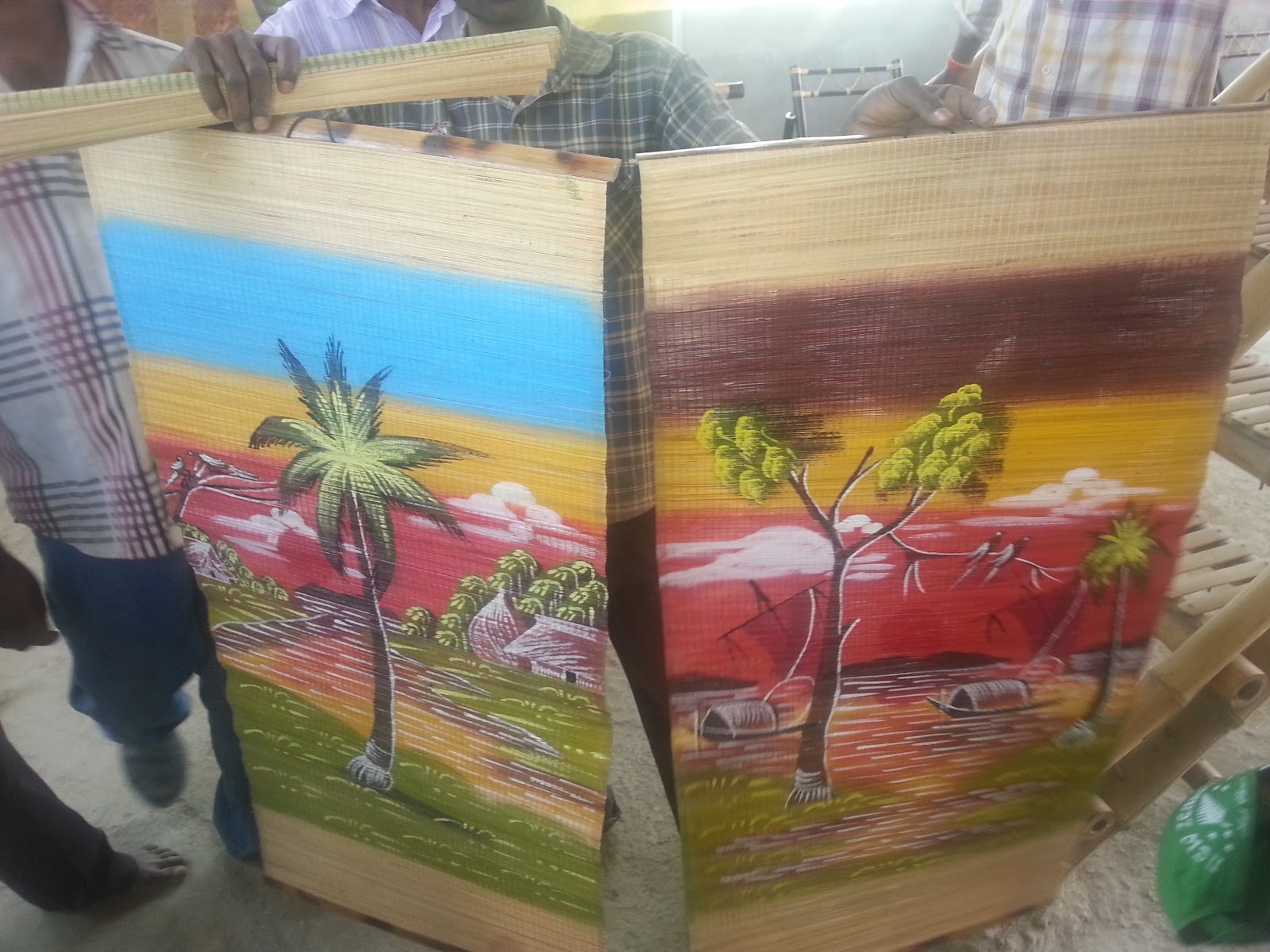
As a part of their unit on Energy and Sustainability, the grade five students were taken for a field trip to "Bamboo House India", Hyderabad. This is social and environmental enterprise owned by Prasanth and Aruna Lingam. Their main focus is to provide a range of eco-friendly ideas(specifically through the use of bamboo) to people. They have employed artisans to do a variety of things with things with bamboo: from making handicrafts and furniture to constructing an entire house!

They began their journey in 2007 and chose to work with bamboo as it a renewable source, abundantly  available in this part of the world. It does not take very long to harvest and possesses high levels of strength, post treatment and seasoning. They are in the process of increasing awareness about their  products and services.

'Bamboo House' also thrives to make their practices sustainable by training villagers and tribals to construct houses with bamboo and other recyclable materials. They have tied up with many NGOs to help people earn a livelihood with the help of bamboo. They are also training them to make houses with mud and reused plastic bottles. We saw a sample of this at their workshop.

The Grade 5 students were excited to witness the versatility of bamboo during their field trip. They were also shown how bamboo is treated using malathion or boric borax. There were few models of rural and urban building designs. ALL the furniture in the owners' house was made of bamboo, including a roof-top and flooring. There was a pent house which was entirely made of bamboo. There were many smaller articles like jewellery, paintings, toothbrush holders, baskets, fruit bowls - all made of bamboo!


Reflection by Inaara Ladha:


Reflection on our Journey
Today we the grade 5s went on a field trip to the bamboo house. It was far away from school and when we got their we saw a wall. The wall was made up of old plastic bottles with mud inside and mud on the outside. It has mud because it makes the bottle stay on the wall. The bamboo wall is renewable and the people’s plan is to build houses which are ecofriendly and renewable. Those houses are for people who want ecofriendly houses.

The bamboo has a kind of sugar which ants like, so they used a chemical called boric borax. The people keep the bamboo stick with the chemical for 10 days and then take it out. There are also plants near the place which are bamboo trees, but they need to grow. We also many things made of bamboo.
After seeing the house I knew now that everything was made out of bamboo. A t-shirt was also made out of bamboo and chair, stairs, necklace and the full house!

It was a new thing for me; I never knew that houses can be build from bamboo. The trip told me more and more information about bamboo. When I was there  I learned about bamboo, saw bamboo, and enjoyed it so much. In my class I felt happy!!!!


Reflection by Amaan Rattansey:


Today we went for a field trip to the bamboo house that is located in Uppal, India. We saw the whole house; almost the whole house was made with bamboo. It was also made with mud and bottles for decoration. We learned a lot about bamboo trees. We also learned that bamboo can also be eco-friendly.

We saw many models of Urban and Rural houses that were made out of bamboo. We saw many renewable and non-renewable things. We also saw how the water was purified and treated well so that they could use it for furniture and many more useful things. The chemical for the treatment of the bamboo is called Malathion Boric Borax.

We also saw chairs, tables, artefacts, paintings, carpets, jewellery, toothbrush stands, holders, baskets, bells, T-shirts, fruit baskets, windows, blinds, roofs, stools, coffee tables, etc. Everything in the bamboo house and in their own house was made of bamboo.

We saw many bamboo bundles and many sticks bottles and loads of mud. We also learned small Facts like bamboo is renewable, looks good, comfortable, eco-friendly, never stops growing and costs less. These are small point’s research and find more.

Reflection by Sanil Bhimani:

On the 26-2-13 we went to a field trip.We went to bamboo house Uppal,India. First we went to a rural bamboo house.Over there we all saw a mam she saw us a wall which was made up of plastic bottles and mud.I was also cheap to buy in a village.It was also very helpful to our environment.In that house everything was made up of bamboo,plastic bottles and mud.It was a very ecofriendly to our environment.

After that,we saw a model of a bamboo house.The model was a bamboo house in urban places.We saw a duplex bamboo house and it was load Bering house.It could lift all the weight of the people.It was a renewable house.But today no one use bamboo house.Renewable means which can stay for a long time.

Next,we went to a tank where the bamboos were treated.First they took a bamboo,then they drilled the bamboos on the top and from the bottom and then they poured water in the tank with a chemical called malathion boric borax.They did this because the sap in the bamboo can be attracted from small insects.If the insects attracts then we need to change the bamboo after 2 or 4 years.If we mix it in the chemical so the chemical would take out all the sap and it would be used for 60 years.

After a minute we all saw a bamboo grass.Over there we saw lots and lots of bamboo.Some of them were young and some were normal.Next,we went back to school and the trip was really enjoyable and interesting.Even you would to the bamboo house and enjoy.

Tuesday, February 26, 2013

The Energy Museum!!!

The Grade five students are currently learning about Energy and Sustainability: "People can make choices to support the sustainability of the Earth's resources". We first inquired into the 'The different forms of energy and it's sources".

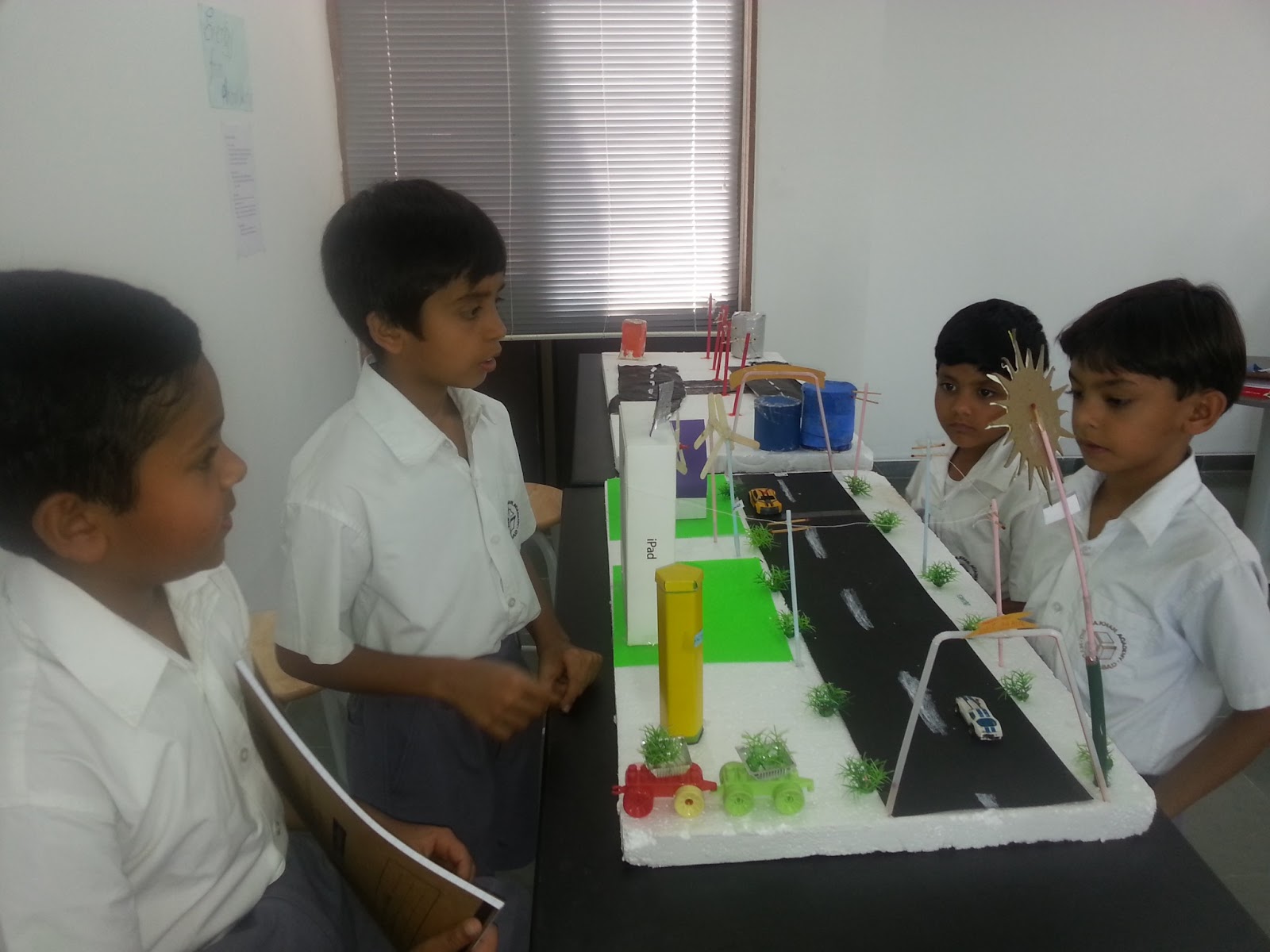
Last week, students were given an assessment. They were given a source of energy and were asked to conduct research about how it works, its uses, advanatages and disadvantages and the various energy transformations that occur when it is used. They were then supposed to apply their knowledge by making a model or by conducting an experiment.

All their models and experiments were displayed on 20th February 2013. The entire school was invited and we called it 'The Energy Museum". The students presented their work very confidently and provided evidences for being inquirers and thinkers.

The next day, they assessed themselves based on an elaborate rubric. They also reflected on the entire project by including the PYP Science Skills.